Pacific Northwest Mushrooms
Preview Cards
Showing 25 of 35 cards
Gemmed amanita / Jeweled death cap
Scientific name: Amanita gemmata
- Yellow to tan cap with scattered white warts
- White gills and stem, ring present
- Toxic, associated with conifers and mixed woods

False morel
Scientific name: Gyromitra esculenta
- Brain-like, convoluted reddish-brown cap
- Hollow or chambered interior, often irregular
- Potentially deadly due to gyromitrin toxin

Birch polypore
Scientific name: Fomitopsis betulina
- Smooth, hoof-shaped white to tan brackets on birch
- Pore surface white, bruising brown with age
- Historically used as tinder and for medicinal purposes
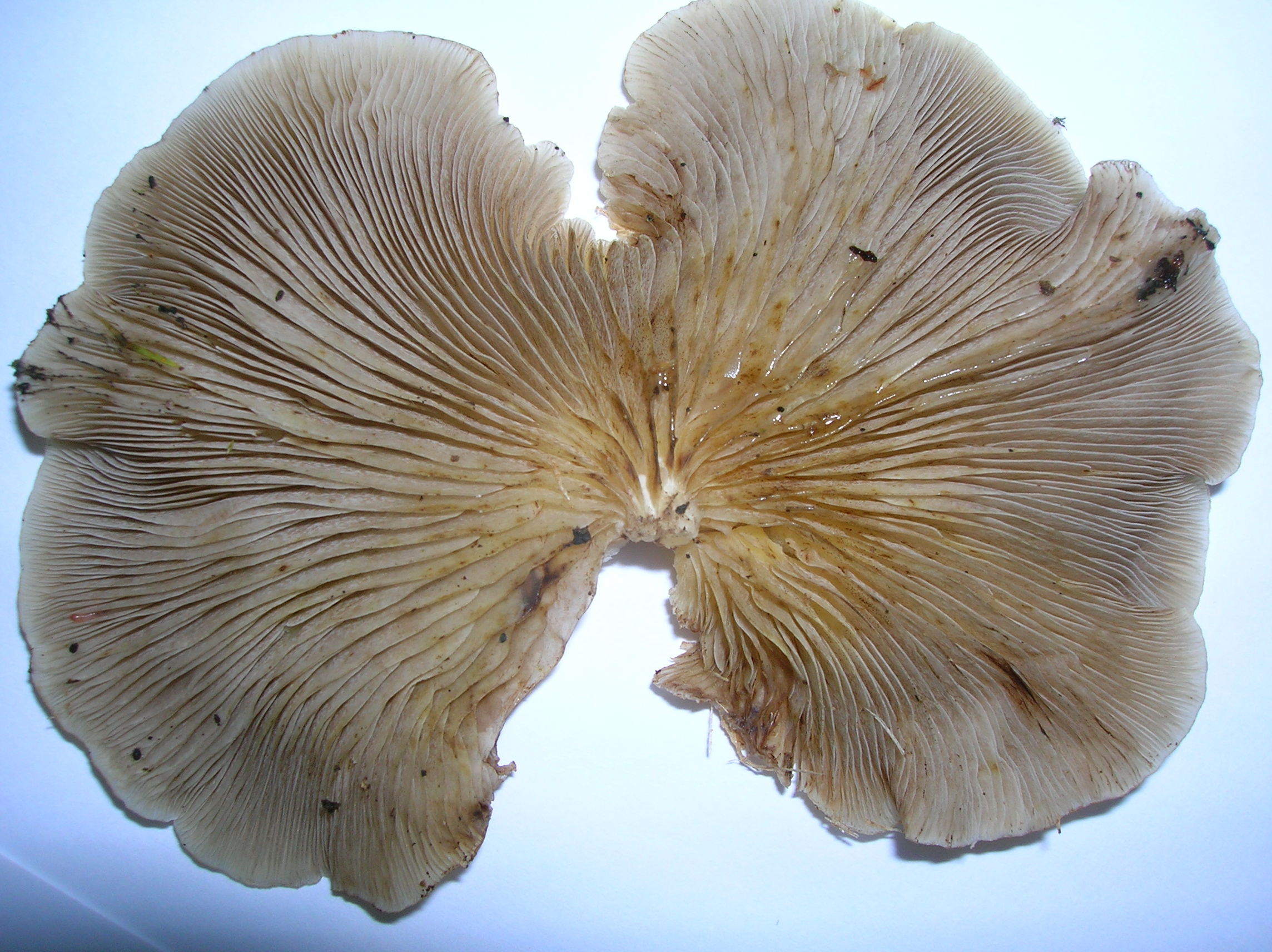
Oyster mushroom
Scientific name: Pleurotus ostreatus
- Shelf-like, oyster-shaped caps on wood
- White to gray-brown with decurrent gills down the short stem
- Edible saprobe on dead logs, often alder or other hardwoods

Destroying angel
Scientific name: Amanita virosa
- Pure white cap, gills, and stem with a bulbous base and volva
- Deadly amatoxin-containing Amanita
- Found in forests; any all-white Amanita should be treated as deadly

Shiny bracket (Gilled polypore)
Scientific name: Gloeophyllum sepiarium
- Brown, zoned, shelf-like brackets on conifer wood
- Has pseudo-gills (maze-like pores) underneath
- Common saprobe on lumber, stumps, and logs
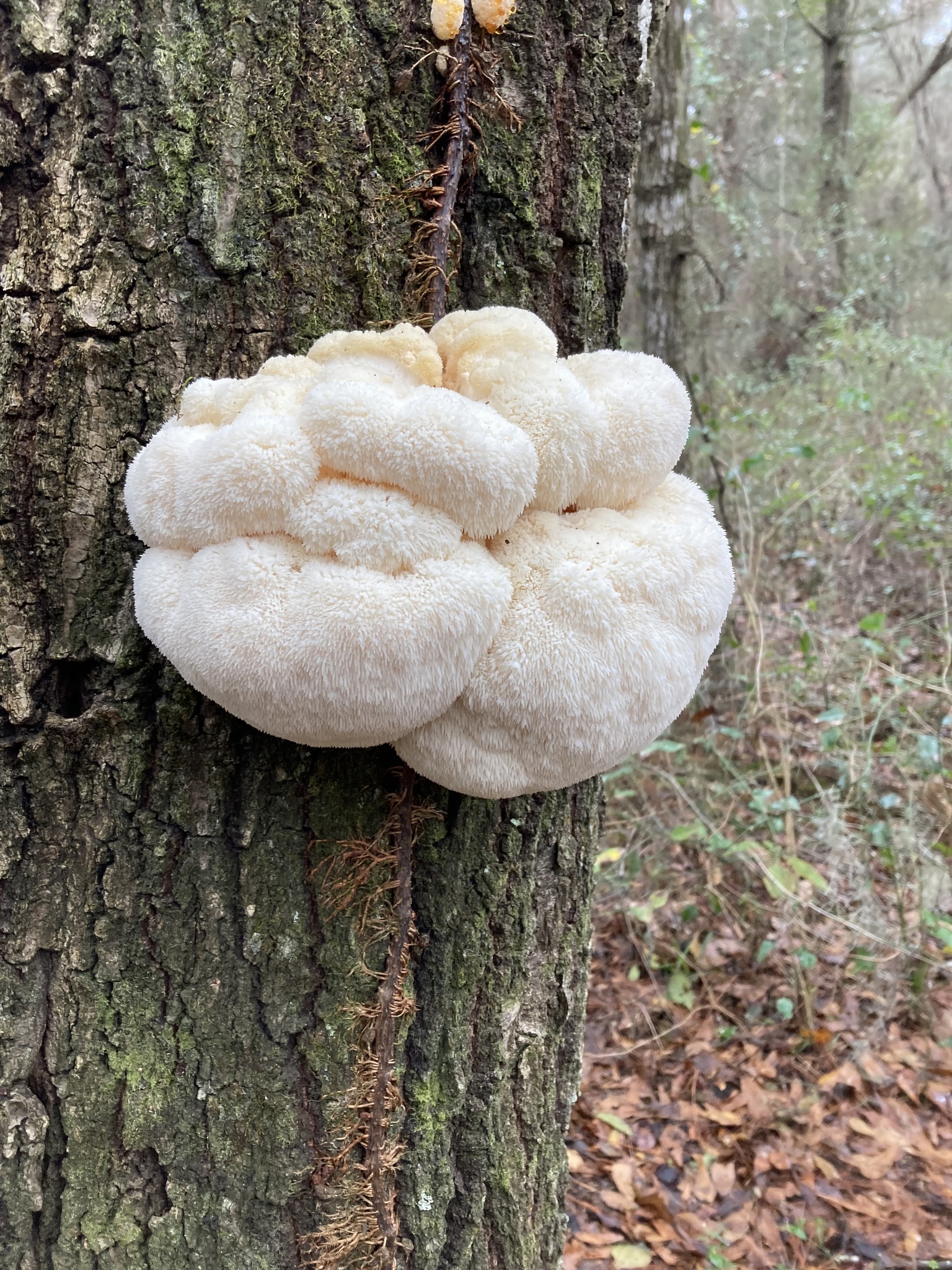
Lion's mane
Scientific name: Hericium erinaceus
- White, shaggy mass of long hanging spines
- Grows on hardwood logs and stumps
- Edible and cultivated; resembles a white pom-pom

Witch's butter
Scientific name: Tremella mesenterica
- Bright yellow, gelatinous, brain-like masses on wood
- Often found on dead branches after rain
- Technically edible but not substantial; a jelly fungus

Stinkhorn mushroom
Scientific name: Phallus impudicus
- Phallic, white stalk with slimy, dark olive spore mass on top
- Strong carrion-like odor attracts flies
- Emerges from a white “egg” structure in soil or wood debris

Shiitake
Scientific name: Lentinula edodes
- Brown, scaly caps with white gills
- Commonly cultivated on logs; occasionally naturalized in forests
- Popular edible mushroom, especially in Asian cuisine

Turkey tail
Scientific name: Trametes versicolor
- Thin, leathery brackets in overlapping rosettes
- Concentric colored zones (brown, cream, blue, tan) like a turkey tail
- Common on dead hardwood; used medicinally

Fly agaric var. guessowii (yellow form)
Scientific name: Amanita muscaria var. guessowii
- Yellow to orange-yellow cap with white warts
- Similar to red fly agaric but paler; often under conifers and birch
- Psychoactive and toxic if improperly prepared
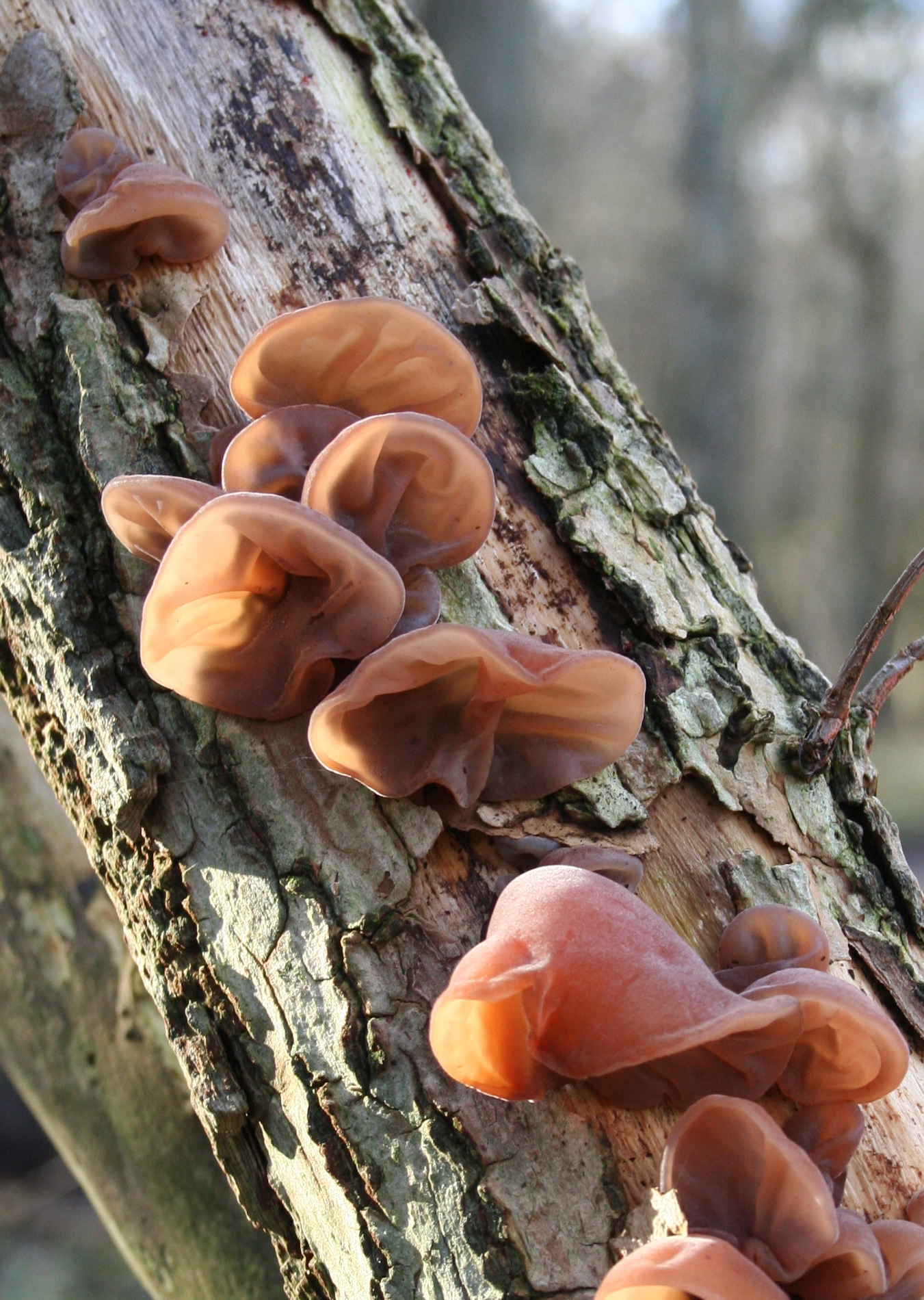
Jelly ear / Wood ear
Scientific name: Auricularia auricula-judae
- Brown, ear-shaped, gelatinous fruiting bodies
- Grows on dead or dying wood, especially elder and other hardwoods
- Edible and used in many Asian dishes

Common inkcap
Scientific name: Coprinopsis atramentaria
- Grayish bell-shaped caps that turn black and inky
- Often in clusters on disturbed ground or near paths
- Can cause illness when combined with alcohol

Jack-o'-lantern mushroom
Scientific name: Omphalotus olearius
- Bright orange clusters at the base of trees or stumps
- True gills (not ridges) that may glow faintly in the dark
- Poisonous, sometimes confused with chanterelles

Shaggy parasol
Scientific name: Chlorophyllum rhacodes
- Large cap with brown, shaggy scales on a whitish background
- Thick stem with movable ring; flesh may redden when cut
- Edible for some, but causes GI upset in others

Puffball mushroom
Scientific name: Lycoperdon perlatum
- Small, round to pear-shaped puffballs with tiny spines
- White and firm when young; later opens to release brown spores
- Edible only when interior is pure white and solid
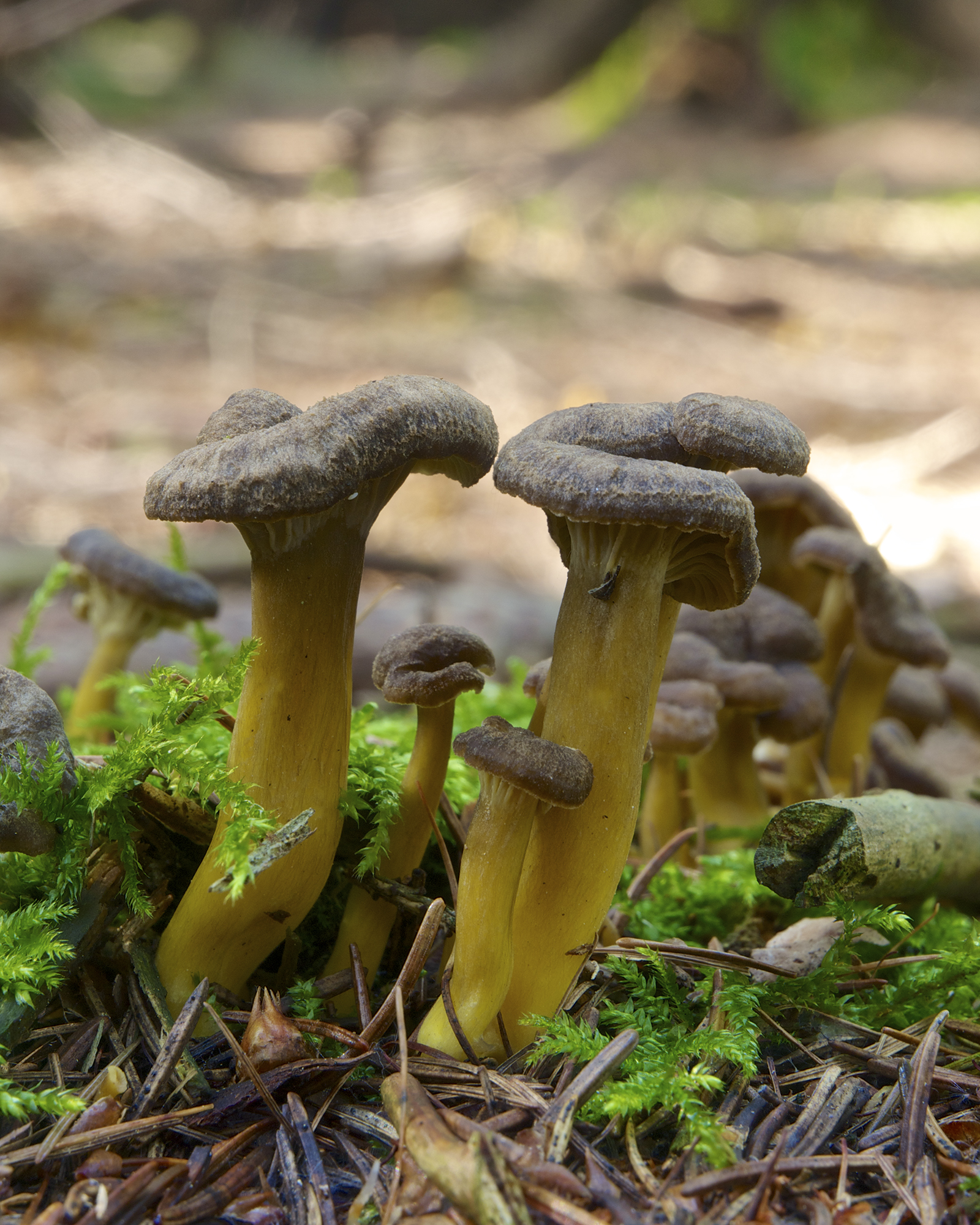
Yellowfoot chanterelle
Scientific name: Craterellus tubaeformis
- Small, yellow to brown funnel-shaped caps
- Hollow, thin yellowish stems
- Edible, often in mossy, wet conifer forests

Hedgehog mushroom
Scientific name: Hydnum rufescens
- Smaller, orange to salmon-colored cap
- Teeth-like spines under cap; often slightly decurrent
- Good edible, common in mossy conifer forests
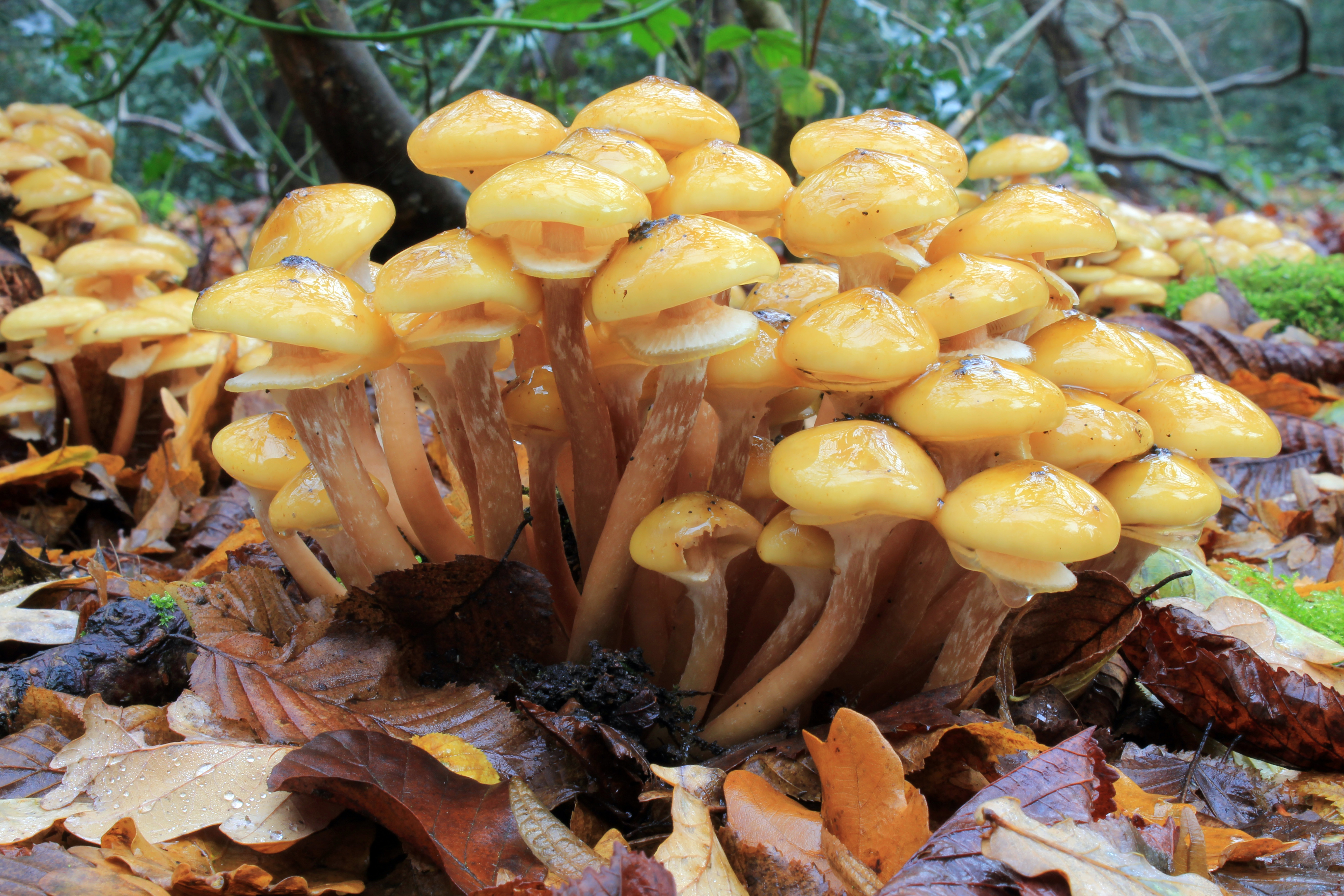
Honey fungus
Scientific name: Armillaria mellea
- Honey-colored caps often in dense clusters at tree bases
- White spore print; may have dark shoe-string rhizomorphs
- Serious tree pathogen; some forms eaten cautiously

Pacific golden chanterelle
Scientific name: Cantharellus formosus
- Golden to apricot-yellow, wavy funnel-shaped cap
- False gills: blunt, forked ridges running down the stem
- Highly prized edible, common in coastal conifer forests
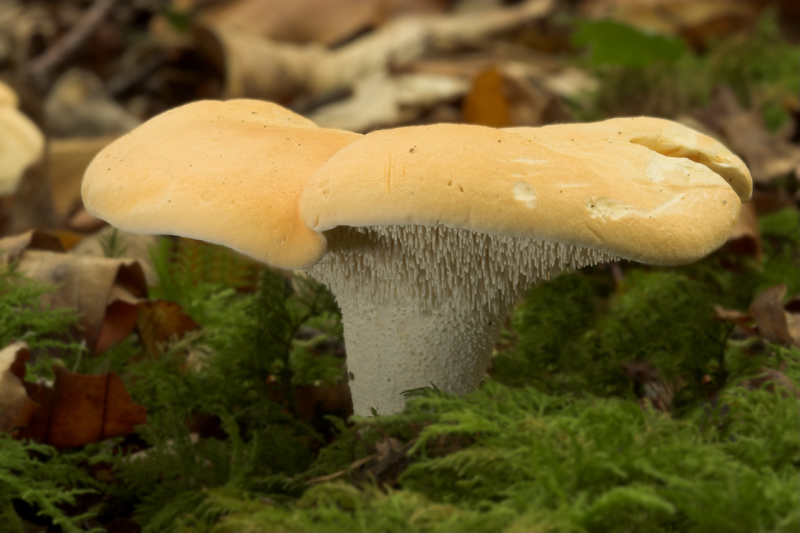
Scaly hedgehog / Wood hedgehog
Scientific name: Hydnum repandum
- Pale, irregular cap with spines (teeth) instead of gills
- Spines hang from the underside like tiny icicles
- Edible, often found under conifers and hardwoods
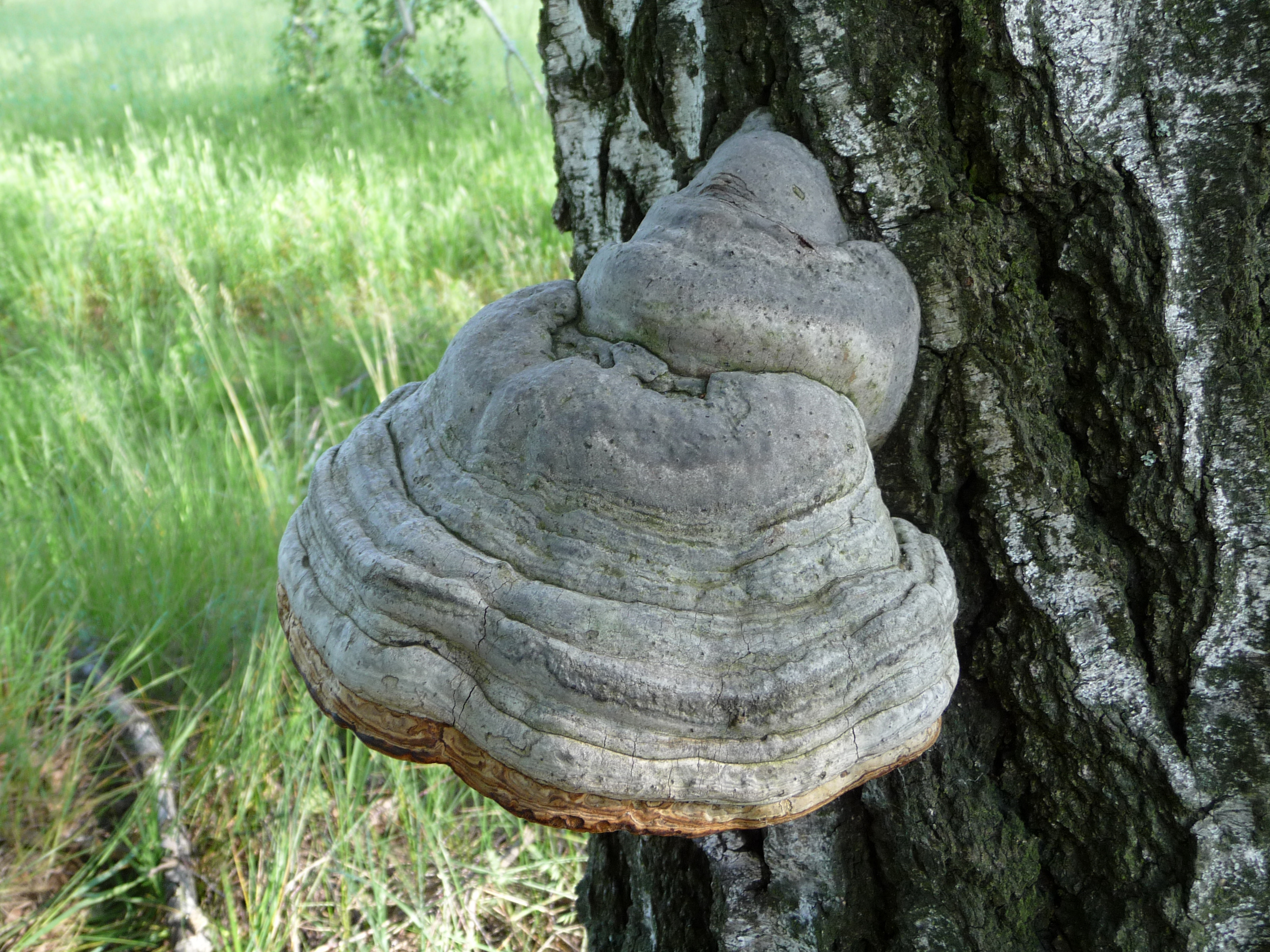
Tinder fungus / Hoof fungus
Scientific name: Fomes fomentarius
- Hard, hoof-shaped conks, gray to brown in color
- Found mostly on birch and beech
- Traditionally used as tinder and for making amadou

Giant puffball
Scientific name: Calvatia gigantea
- Very large, round white puffball (can be soccer-ball sized)
- Smooth surface; interior turns yellow-brown when old
- Edible when young and uniformly white inside
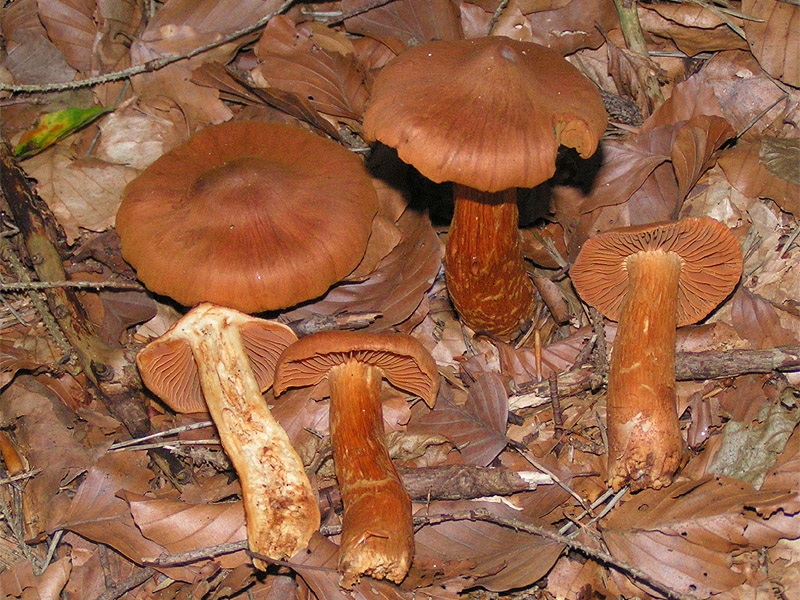
Deadly webcap
Scientific name: Cortinarius rubellus
- Rusty orange-brown cap with fibrillose surface
- Webby cortina remnants on stem
- Lethal toxin (orellanine); can resemble edible species
+ 10 more cards available after signup
Study all 35 cards with spaced repetition
Sign up for free and start learning with Flashbake's AI-powered flashcards.